
DFOS Infrastructure
Safety Solution
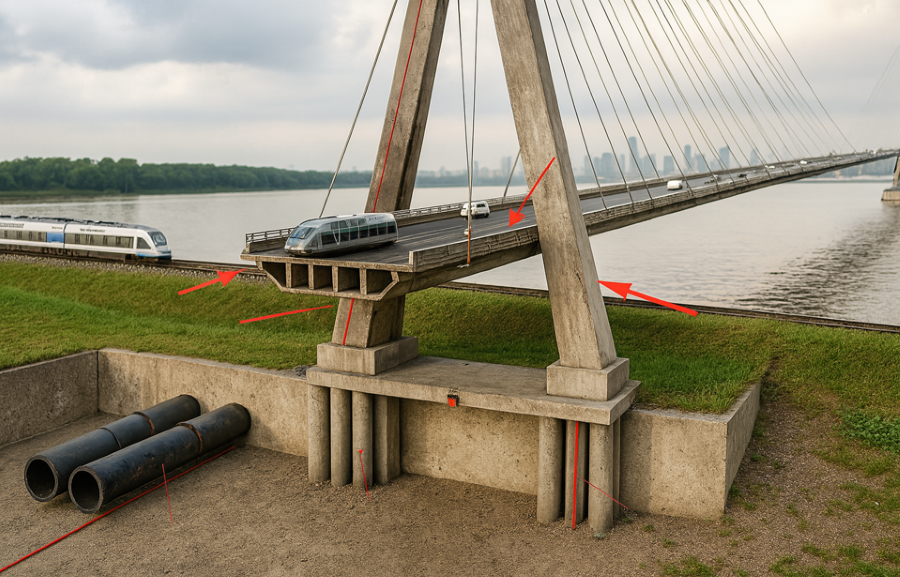
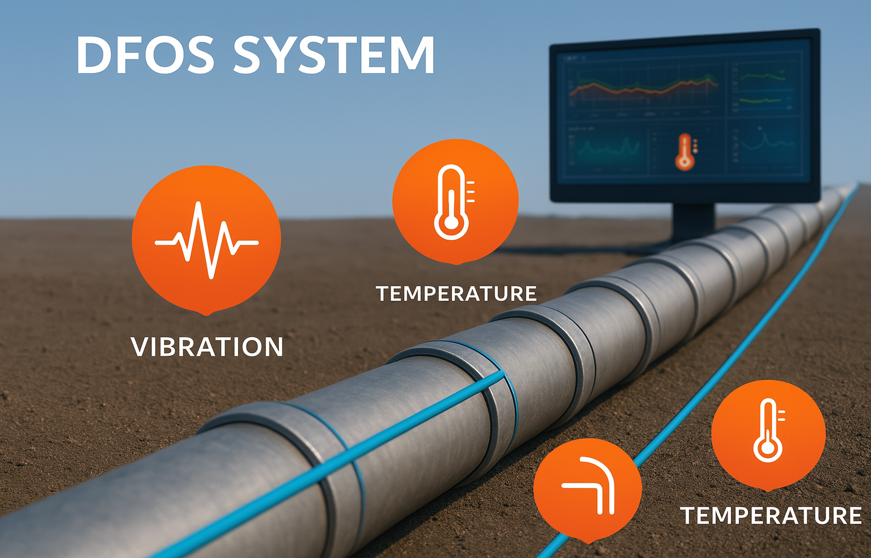
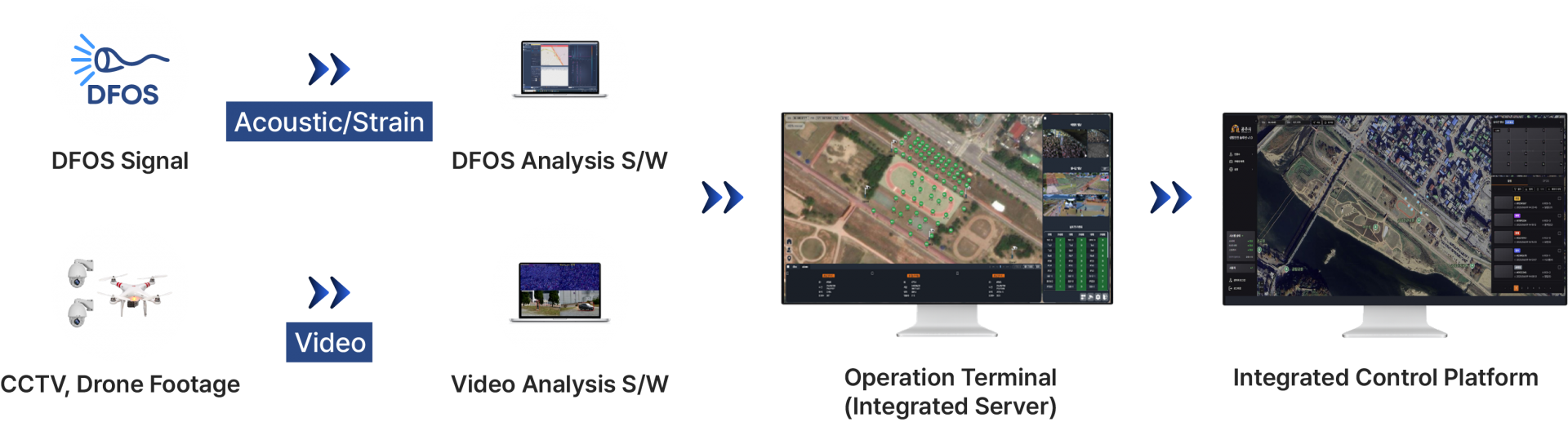
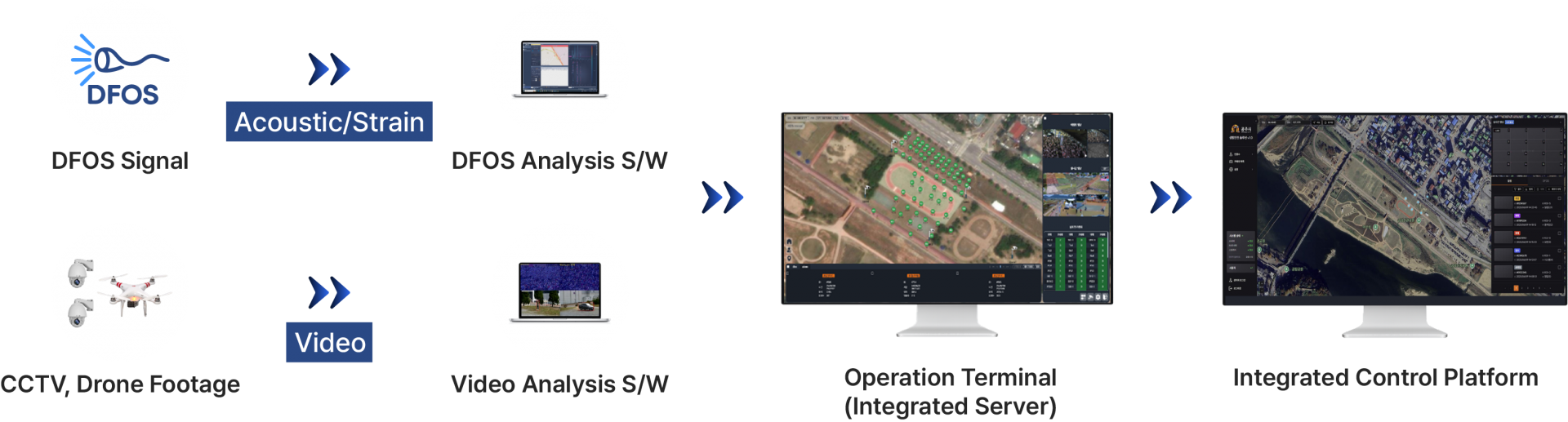
![]() | The DFOS-based infrastructure safety solution is an integrated monitoring system that utilizes distributed fiber optic sensors to detect anomalies such as vibration, temperature, and strain in real time. It is linked with an AI video analysis system to identify and respond to potential hazards at an early stage. It can be applied to a wide range of infrastructures such as roads, tunnels, bridges, pipelines, and industrial complexes. The system automatically detects various risk factors—including intrusion, flooding, cracking, leakage, and displacement—enhancing infrastructure stability and maintenance efficiency. |
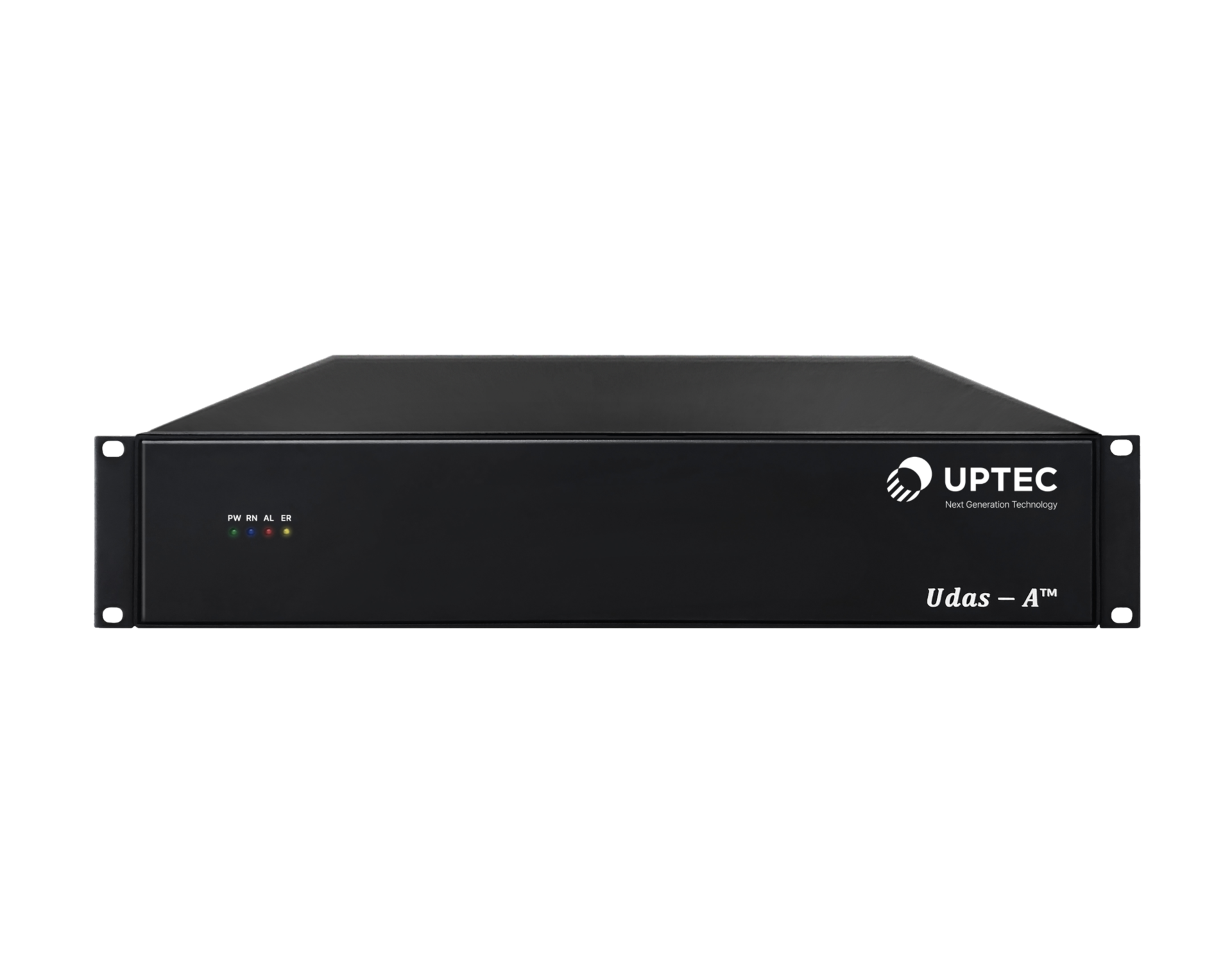
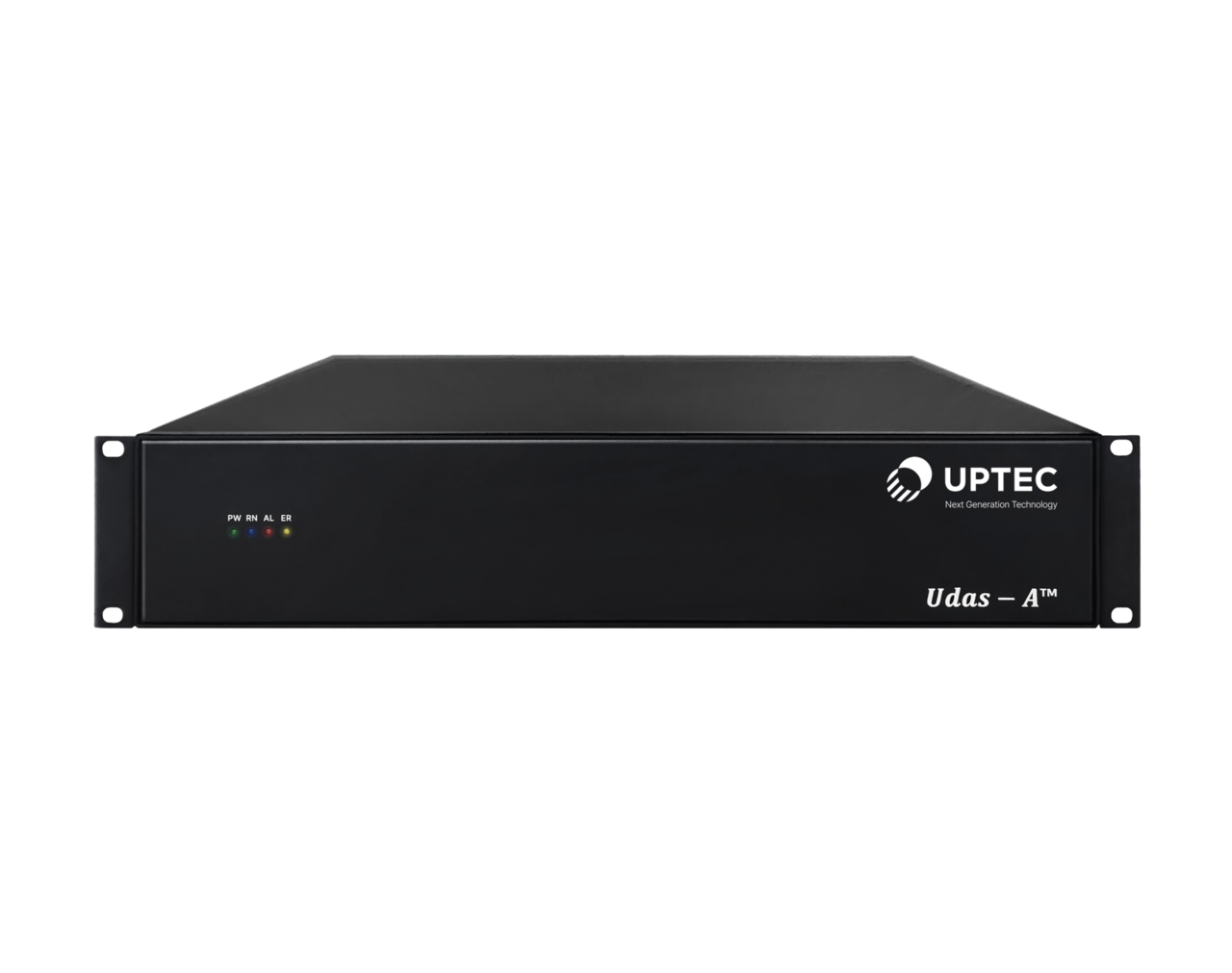
01 Udas-A (DAS)
Data Output Items | Vibration / Acoustic |
Sensing Distance | 20km |
Optical Wavelength | 1550nm |
Sensor Fiber Type | Single-Mode Fiber (SMF) |
Optical Pulse Rate | 1, 2, 2.5, 10, 20 (kHz) |
Frequency Range | 10 (kHz) |
Spatial Resolution | 1, 2, 5, 10 (m) |
Housing | 19-inch rack mount, 2U |
Optical Connector | E2000/APC |
Input Voltage | 220VAC (50/60Hz) |
Operating Temperature Range | 0 ~ 50 (℃) |
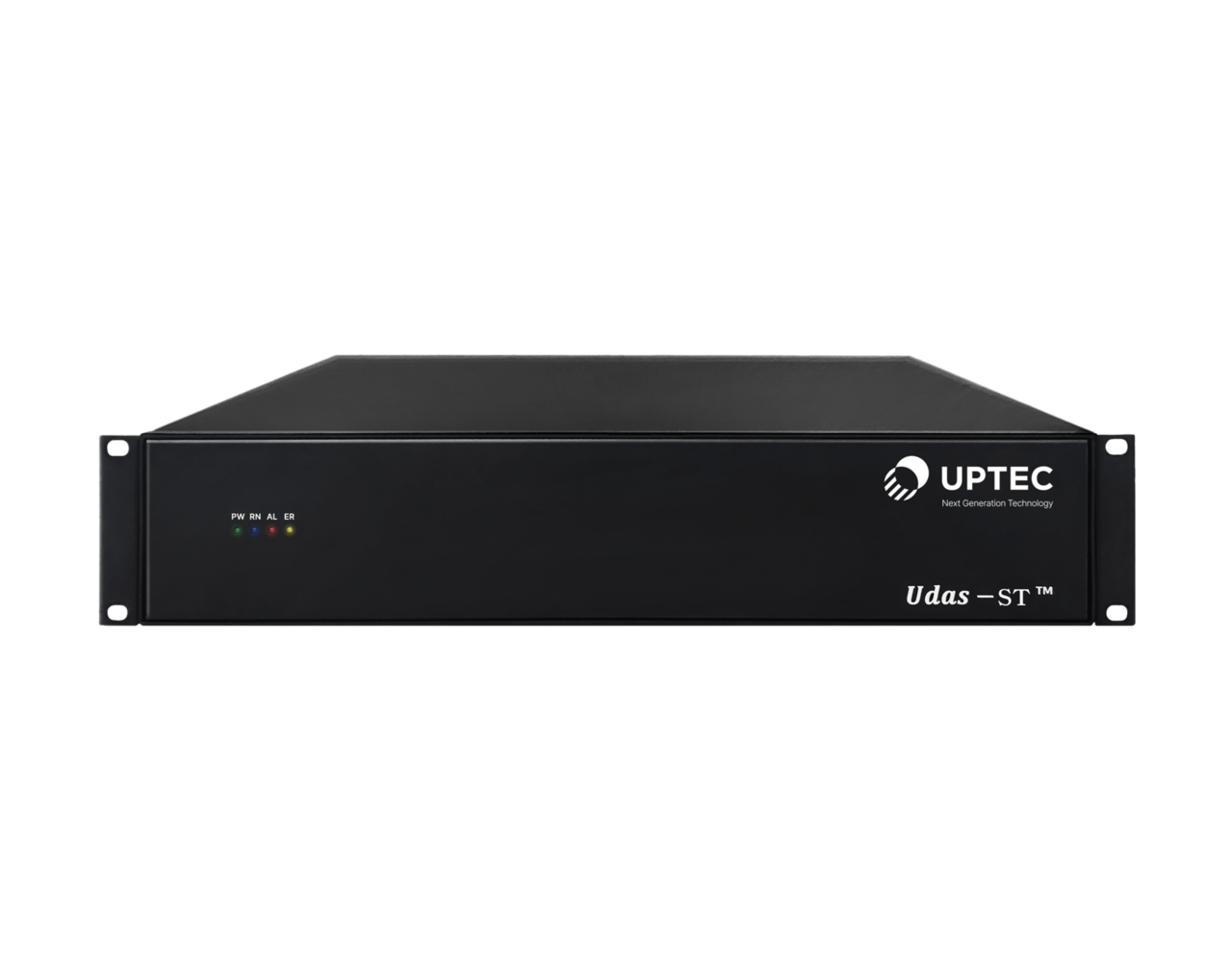
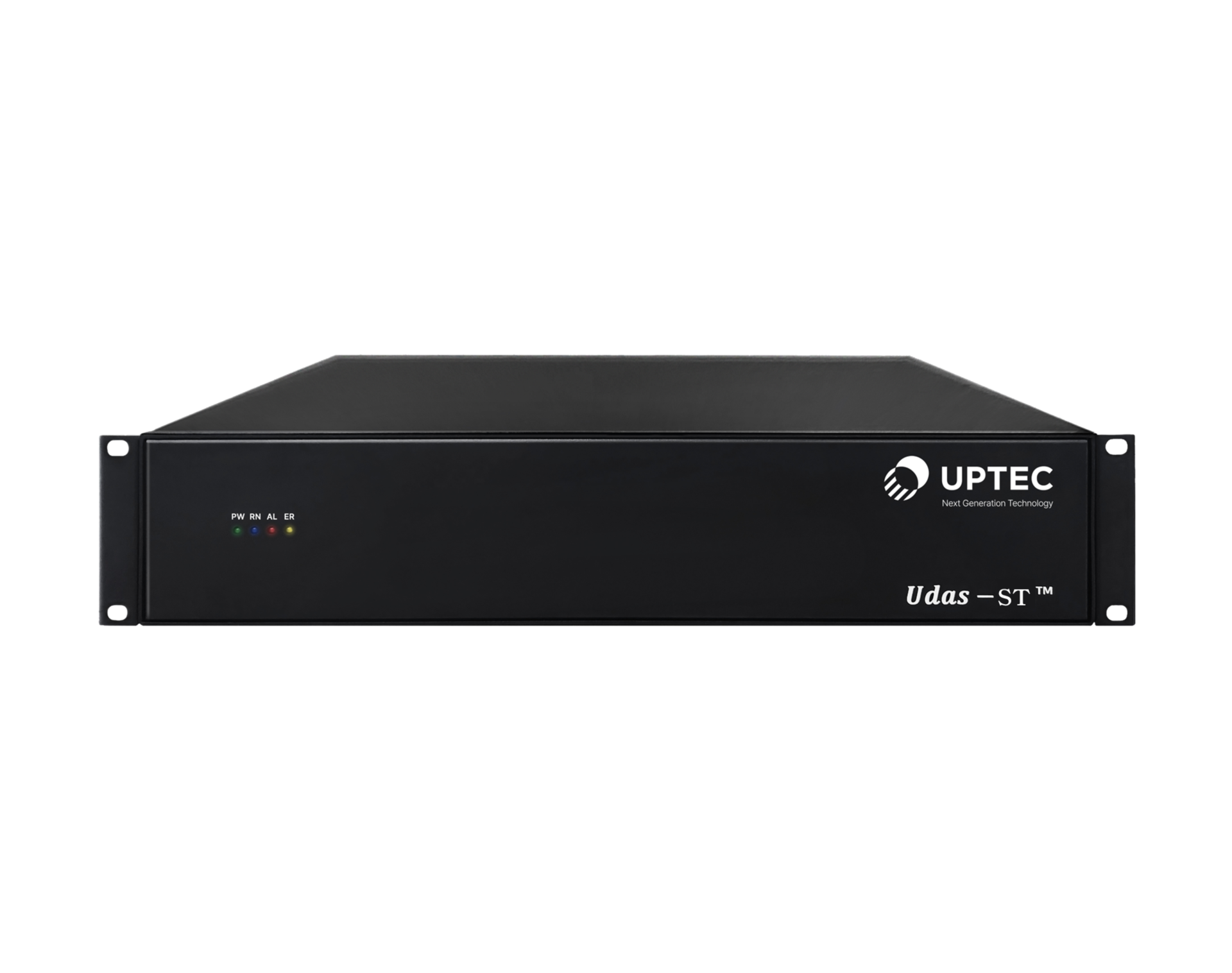
02 Udas-ST (DSTS)
Data Output Items | Strain Difference / Temperature |
Sensing Distance | 50km |
Optical Wavelength | 1550nm |
Sensor Fiber Type | Single-Mode Fiber (SMF) |
Optical Pulse Rate | 1, 2, 2.5, 10, 20 (kHz) |
Output Spatial Sampling Interval | 1.25, 2.5, 5, 10, 20, 40 (m) |
Sensing Temperature Range | -200℃ ~ +800℃ (varies by cable material) |
Minimum Detectable Strain Resolution | 20µε |
Housing | 19-inch rack mount, 2U |
Optical Connector | E2000/APC |
Input Voltage | 220VAC (50/60Hz) |
Operating Temperature Range | 0 - 50 (℃) |
03
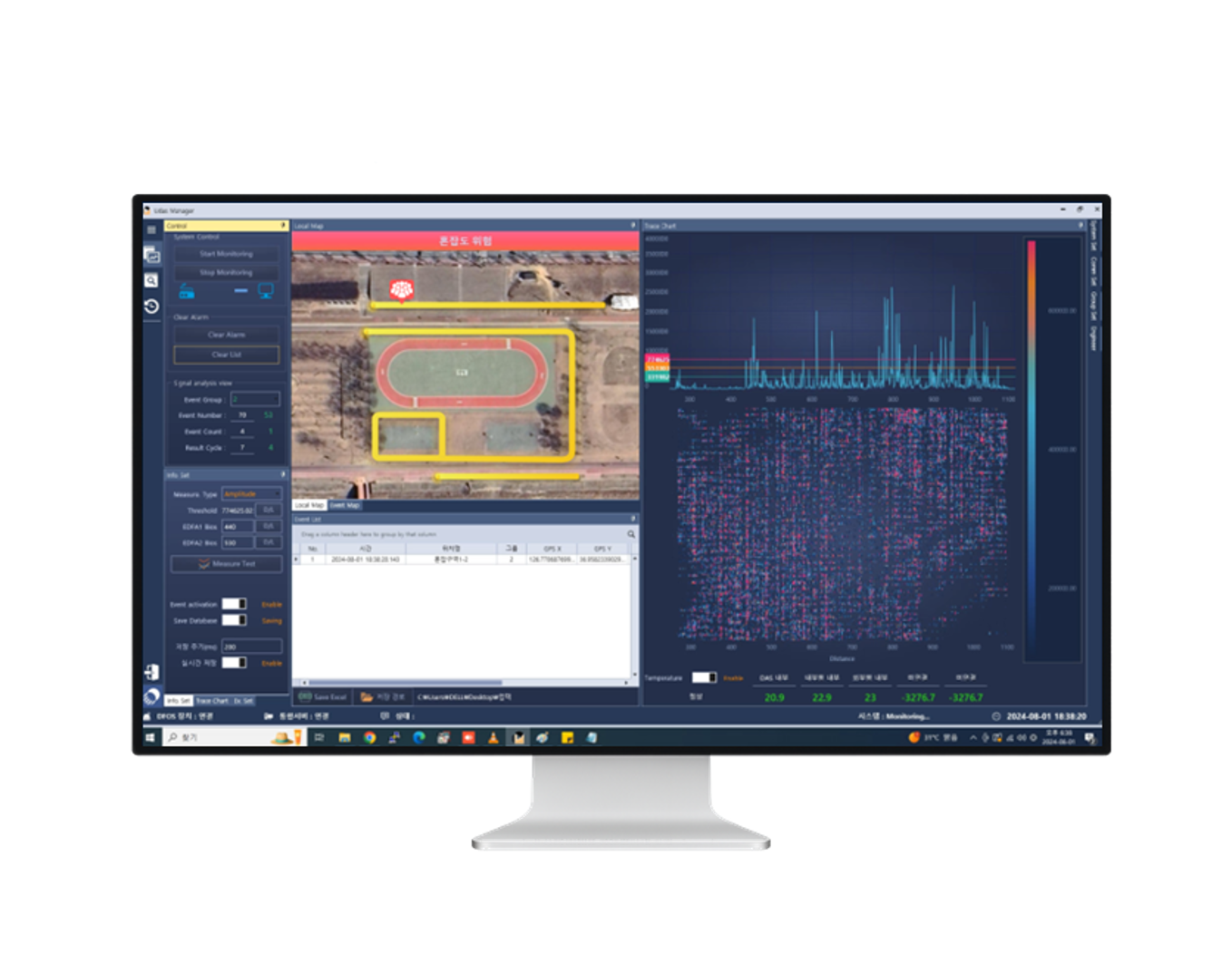
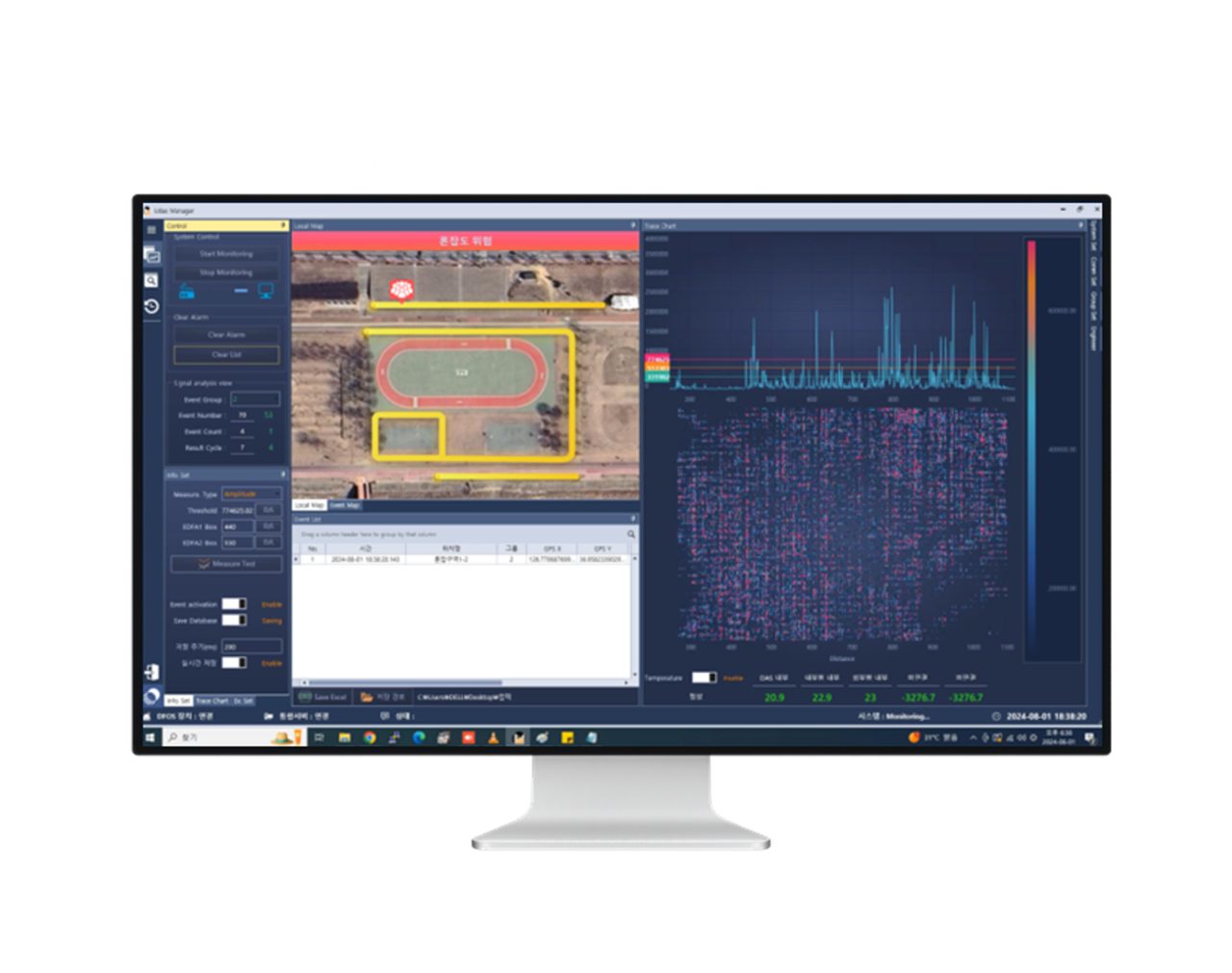
DFOS Analysis Server
(Distributed Fiber Optic Sensing)
DFOS Signal Analysis | Application-specific signal analysis and anomaly detection algorithms |
Event Detection | Crowd density, perimeter intrusion, pipeline leakage, real-time temperature/strain monitoring |
Functions | - Configuration and control of DFOS instruments (Udas-A, Udas-ST) - Real-time trace and waterfall charts for acoustic, temperature, and strain signals - Event configuration and mapping by optical cable section - GPS map-based event visualization - Real-time data storage and playback - Event history storage and search |
Update Rate | (DAS) 0.5ms~, (DSTS) 15s~ |
Platform | Windows, .NET Framework 4.7 or higher |
Applications | Wide-area monitoring (landslides, embankments, structures, pipelines, perimeter intrusion, etc.) |
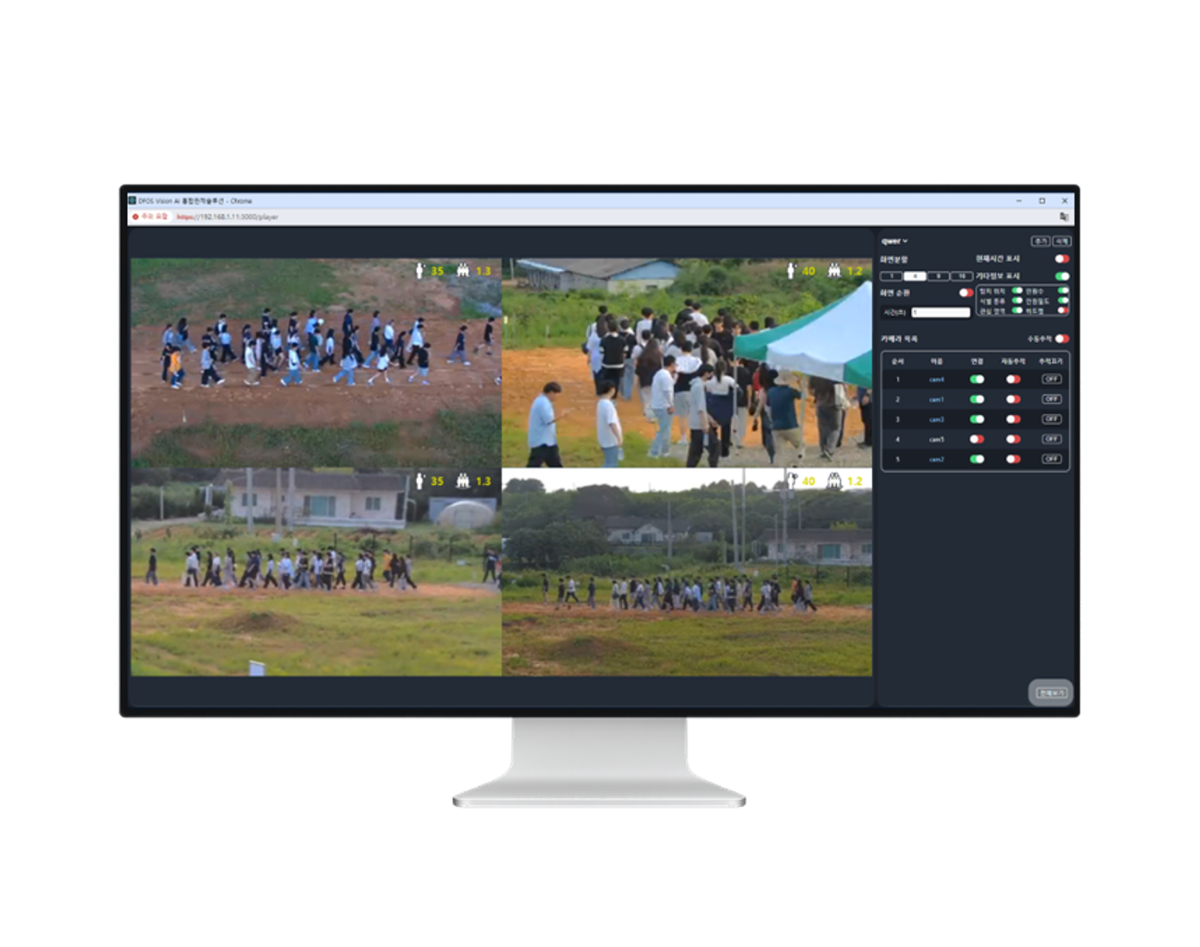
04 AI Video Analysis Server
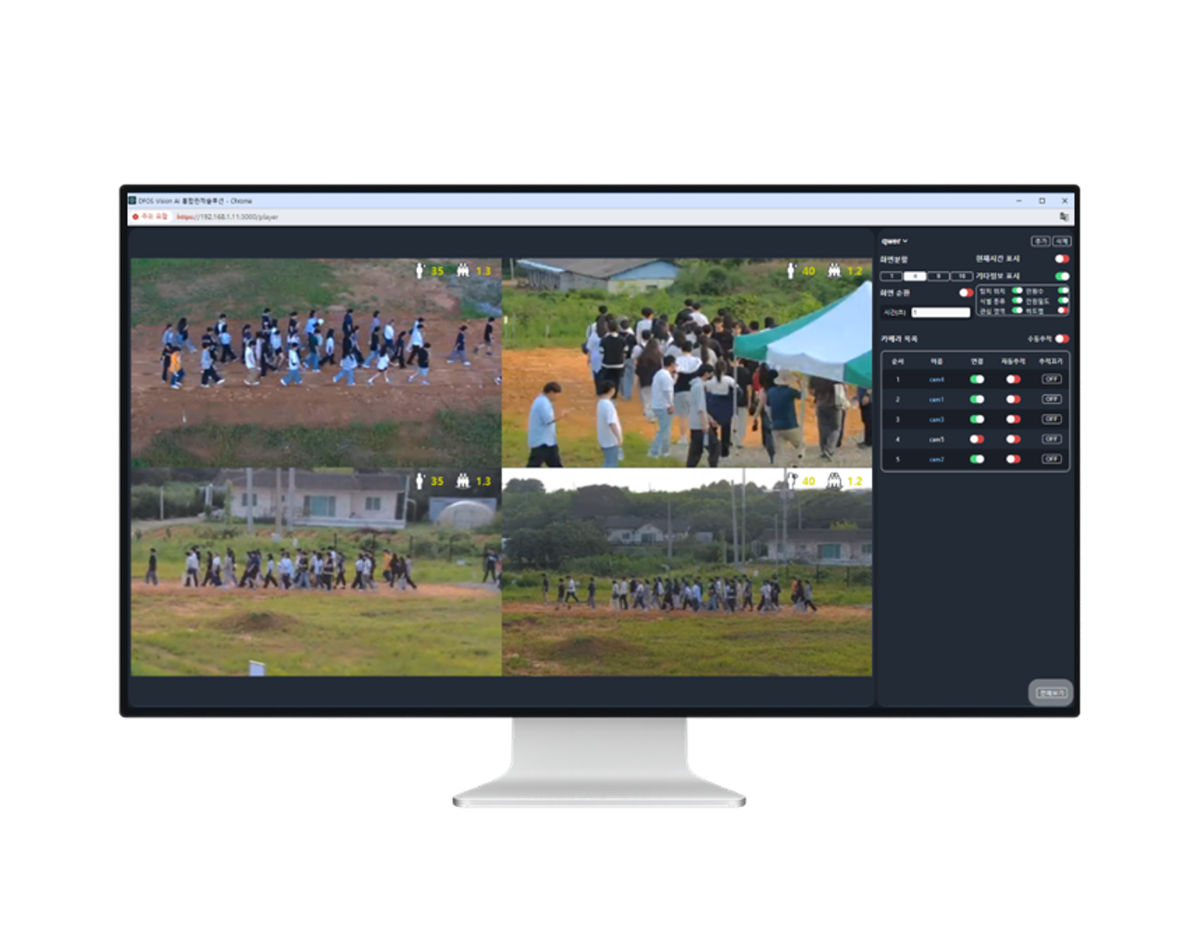
Object Detection | Object detection based on RGB/IR video (humans, vehicles, animals, etc.) |
Crowd Counting | Head counting and crowd estimation models |
Video Control | Supports region setting within video and real-time video streaming |
Event Detection | Crowd congestion, perimeter intrusion, loitering, falling, drowning, etc. |
Functions | GPS map-based event visualization and black box functionality |
Supported Streaming Resolution | 1920*1080 |
Video Channels | 16 channels (expandable) |
Platform | Windows/Linux, Web-based client support |
Applications | Disaster safety, smart cities, industrial complexes, airports, and high-security facilities |
Additional Features | - GS Certification Grade 1 - Multi-channel real-time streaming (H.264 / MJPEG) - RTSP server–compatible video streaming |
![]() | DFOS Technology Applications |
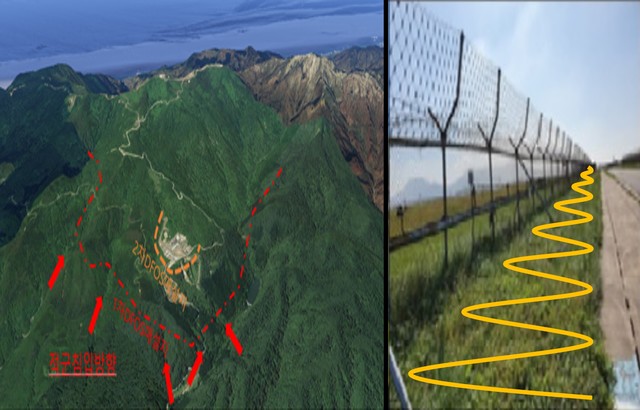
Wide-Area Perimeter System
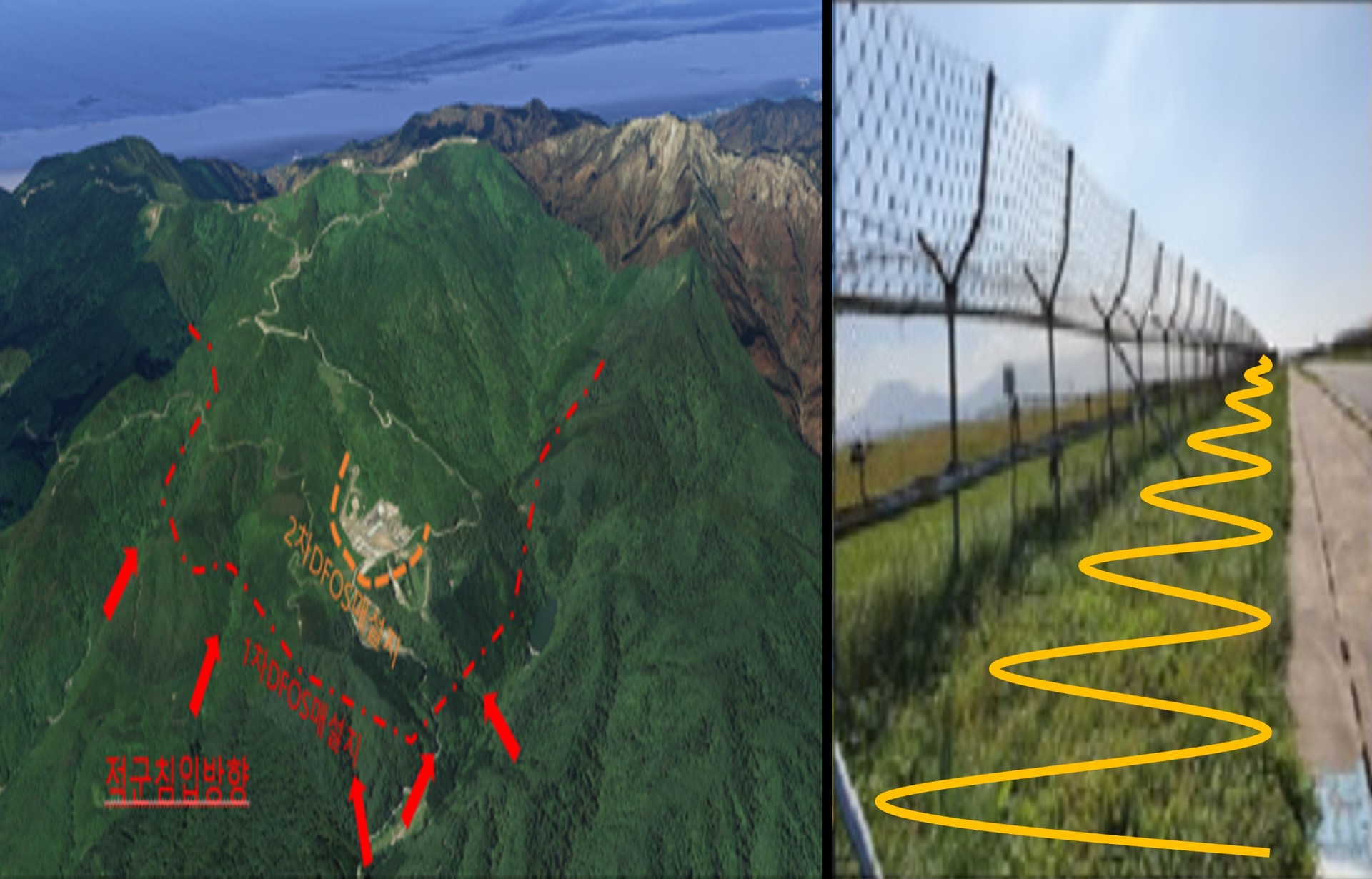
An optical sensing system for intrusion detection and anomaly monitoring, applicable to defense, disaster safety, and critical facility protection sectors requiring real-time surveillance in wide or rugged areas.
Wide-Area Fire Monitoring
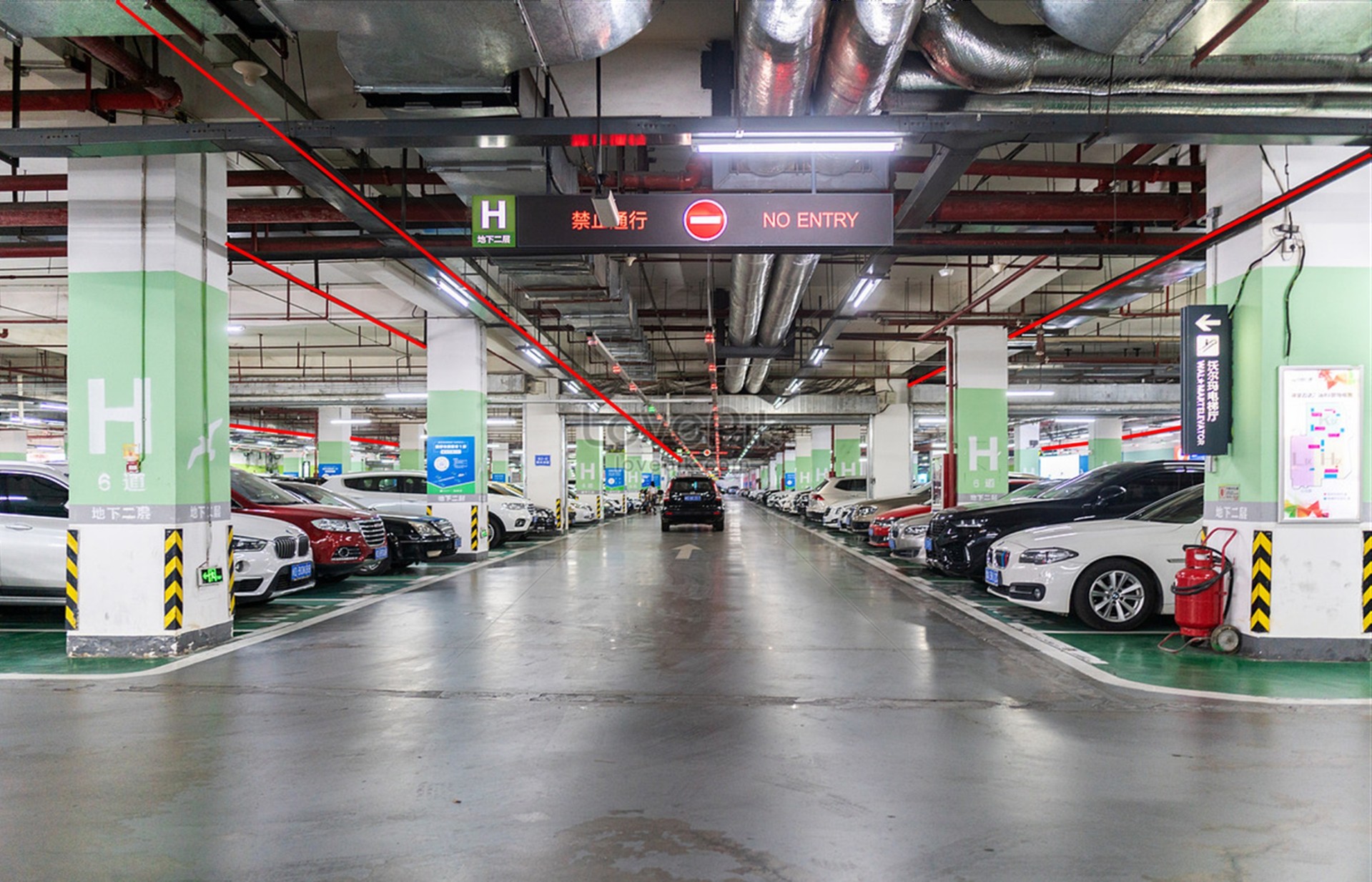
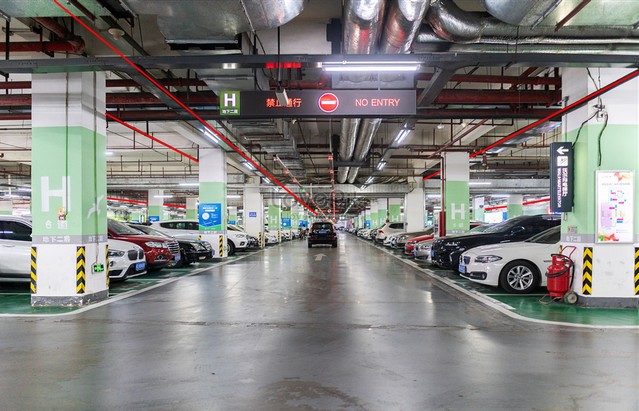
A monitoring system that installs optical cables in power tunnels, parking facilities, and similar environments to detect temperature rises and abnormal sounds, enabling real-time response to fires or explosions through integration with CCTV systems.
Landslide and Embankment Collapse Prediction
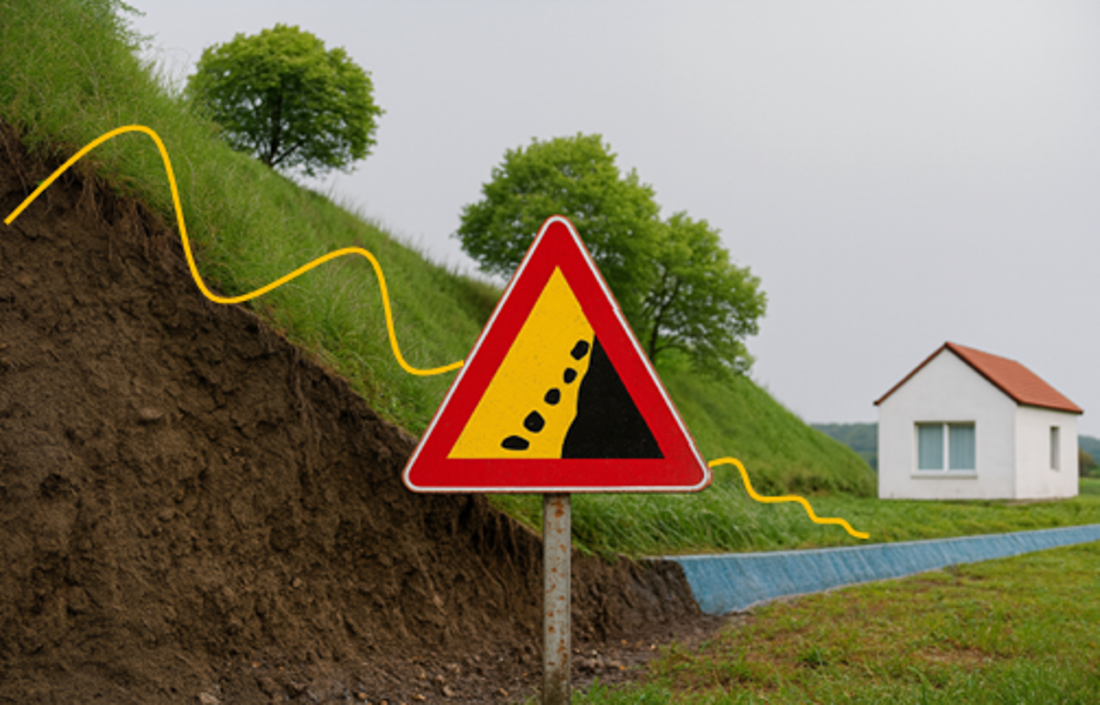
A disaster prevention monitoring system that installs optical sensors in landslide- and embankment-prone areas to detect ground vibration, acoustic signals, and temperature changes in real time, enabling early prediction and warning.
Structural Deformation and Collapse Monitoring
A structural safety monitoring system that installs optical cables inside and outside tunnels or buildings to detect signs of collapse, acoustic signals, and temperature changes, enabling early prediction of fires, leaks, and other hazards.
Pipeline Monitoring
A monitoring solution that installs fiber optic sensors on the outer surface of pipelines—such as water, gas, and subsea lines—to detect leaks and external impacts in real time.
Sinkhole Monitoring
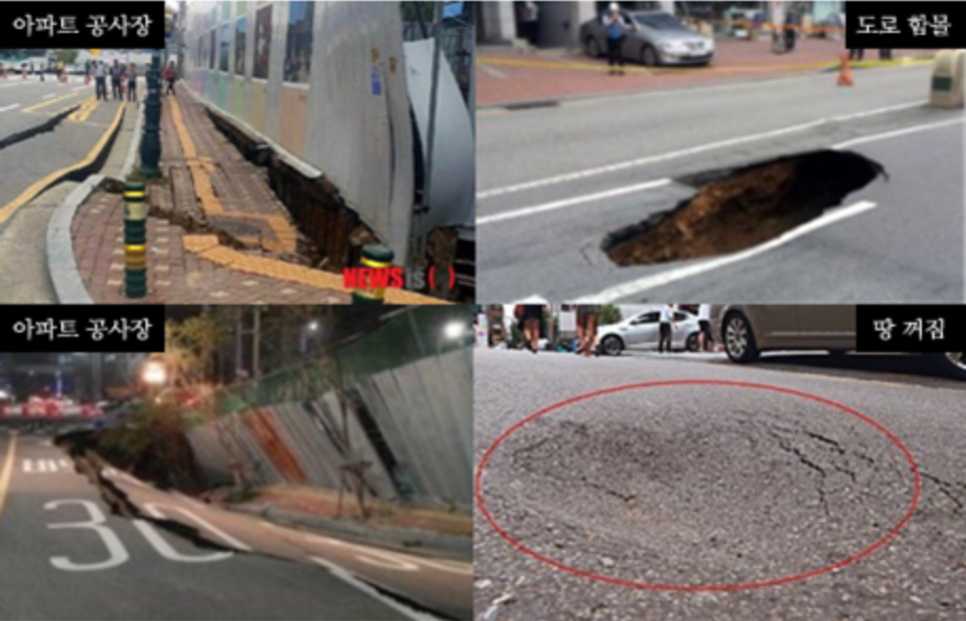
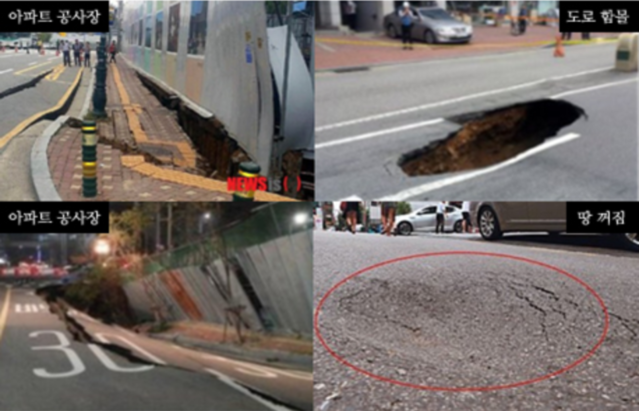
An underground safety monitoring system that embeds optical cables around roads and buildings to detect subtle ground deformations, cavity formations, leaks, and vibrations in real time.
DFOS Infrastructure Safety Solution
![]() | The DFOS-based infrastructure safety solution is an integrated monitoring system that utilizes distributed fiber optic sensors to detect anomalies such as vibration, temperature, and strain in real time. It is linked with an AI video analysis system to identify and respond to potential hazards at an early stage. It can be applied to a wide range of infrastructures such as roads, tunnels, bridges, pipelines, and industrial complexes. The system automatically detects various risk factors—including intrusion, flooding, cracking, leakage, and displacement—enhancing infrastructure stability and maintenance efficiency. |
01
Udas-A (DAS)
| Data Output Items | Vibration / Acoustic | Sensing Distance | 20km |
| Sensor Fiber Type | Single-Mode Fiber (SMF) | Optical Wavelength | 1550nm |
| Optical Pulse Rate | 1, 2, 2.5, 10, 20 (kHz) | Frequency Range | 10 (kHz) |
| Spatial Resolution | 1, 2, 5, 10 (m) | Optical Connector | E2000/APC |
| Housing | 19-inch rack mount, 2U | Operating Temperature Range | 0 - 50 (℃) |
| Input Voltage | 220VAC (50/60Hz) |
02
Udas-ST (DSTS)
| Data Output Items | Strain Difference / Temperature | Sensing Distance | 50km |
| Sensor Fiber Type | Single-Mode Fiber (SMF) | Optical Wavelength | 1550nm |
| Optical Pulse Rate | 1, 2, 2.5, 10, 20 (kHz) | Optical Connector | E2000/APC |
| Output Spatial Sampling Interval | 1.25, 2.5, 5, 10, 20, 40 (m) | Minimum Detectable Strain Resolution | 20 µε |
| Sensing Temperature Range | -200°C to +800°C (varies by cable material) | Input Voltage | 220 VAC (50/60 Hz) |
| Housing | 19-inch rack mount, 3U | Operating Temperature Range | 0 – 50 °C |
03
DFOS Analysis Server (Distributed Fiber Optic Sensing)
DFOS Signal Analysis | Application-specific signal analysis and anomaly detection algorithms |
Event Detection | Crowd density, perimeter intrusion, pipeline leakage, real-time temperature/strain monitoring |
Functions | - Configuration and control of DFOS instruments (Udas-A, Udas-ST) - Real-time trace and waterfall charts for acoustic, temperature, and strain signals - Event configuration and mapping by optical cable section - GPS map-based event visualization - Real-time data storage and playback - Event history storage and search |
Update Rate | (DAS) from 0.5 ms / (DSTS) from 15 s |
Platform | Windows, .NET Framework 4.7 or higher |
Applications | Wide-area monitoring (landslides, embankments, structures, pipelines, perimeter intrusion, etc.) |
04
AI Video Analysis Server
Object Detection | Object detection based on RGB/IR video (humans, vehicles, animals, etc.) |
Crowd Counting | Head counting and crowd estimation models |
Video Control | Supports region setting within video and real-time video streaming |
Event Detection | Crowd congestion, perimeter intrusion, loitering, falling, drowning, etc. |
Functions | GPS map-based event visualization and black box functionality |
Supported Streaming Resolution | 1920×1080 |
Video Channels | 16 channels (expandable) |
Platform | Windows/Linux, Web-based client support |
Applications | Disaster safety, smart cities, industrial complexes, airports, and high-security facilities |
Additional Features | - GS Certification Grade 1 - Multi-channel real-time streaming (H.264 / MJPEG) - RTSP server–compatible video streaming |
![]() | DFOS Technology Applications |
Wide-Area Perimeter System
An optical sensing system for intrusion detection and anomaly monitoring, applicable to defense, disaster safety, and critical facility protection sectors requiring real-time surveillance in wide or rugged areas.
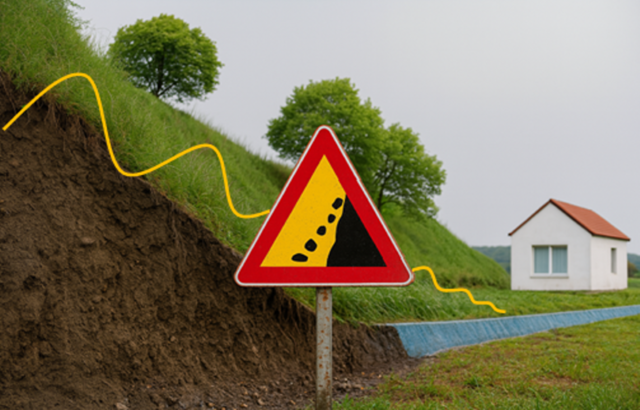
Landslide and Embankment Collapse Prediction
A disaster prevention monitoring system that installs optical sensors in landslide- and embankment-prone areas to detect ground vibration, acoustic signals, and temperature changes in real time, enabling early prediction and warning.
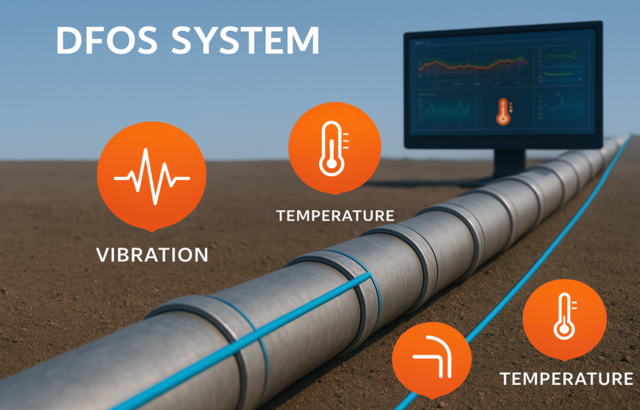
Pipeline
Monitoring
A monitoring solution that installs fiber optic sensors on the outer surface of pipelines—such as water, gas, and subsea lines—to detect leaks and external impacts in real time.
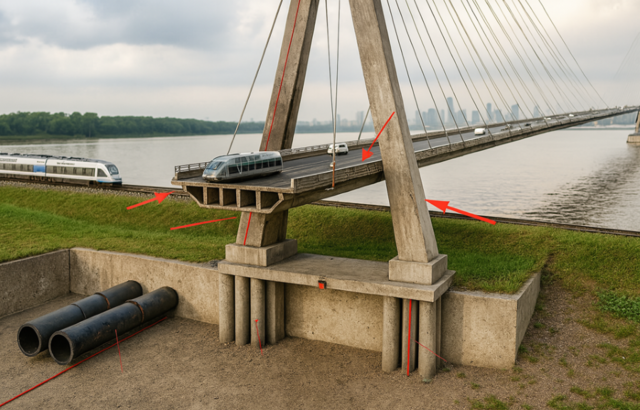
Structural Deformation and Collapse Monitoring
A structural safety monitoring system that installs optical cables inside and outside tunnels or buildings to detect signs of collapse, acoustic signals, and temperature changes, enabling early prediction of fires, leaks, and other hazards.
Wide-Area Fire Monitoring
A monitoring system that installs optical cables in power tunnels, parking facilities, and similar environments to detect temperature rises and abnormal sounds, enabling real-time response to fires or explosions through integration with CCTV systems.
Sinkhole
Monitoring
An underground safety monitoring system that embeds optical cables around roads and buildings to detect subtle ground deformations, cavity formations, leaks, and vibrations in real time.

Headquarters R&D Center
#506, The First Tower, 10 Dongtandaero 21-gil, Yeongcheon-dong, Hwaseong-si, Gyeonggi-do
Factory
#510, The First Tower, 10 Dongtandaero 21-gil, Yeongcheon-dong, Hwaseong-si, Gyeonggi-do
2nd R&D - Yonsei University
Room 212-A-2, Engineering Hall, Yonsei University, 50 Yonsei-ro, Seodaemun-gu, Seoul
3rd R&D - KAIST Mobility Center
Room 207(208), 2F, 6 Cheomdansandan 5-gil, Hongbuk-eup, Hongseong-gun, Chungcheongnam-do

![]() | ||
Headquarters R&D Center #506, The First Tower, 10 Dongtandaero 21-gil, Yeongcheon-dong, Hwaseong-si, Gyeonggi-do Factory #510, The First Tower, 10 Dongtandaero 21-gil, Yeongcheon-dong, Hwaseong-si, Gyeonggi-do | 2nd R&D - Yonsei University Room 212-A-2, Engineering Hall, Yonsei University, 50 Yonsei-ro, Seodaemun-gu, Seoul 3rd R&D - KAIST Mobility Center Room 207(208), 2F, 6 Cheomdansandan 5-gil, Hongbuk-eup, Hongseong-gun, Chungcheongnam-do |